
Dialectical materialism
A materialist philosophy of nature and society based on Hegelian dialectics.

Omar kandil · CC BY-SA 3.0
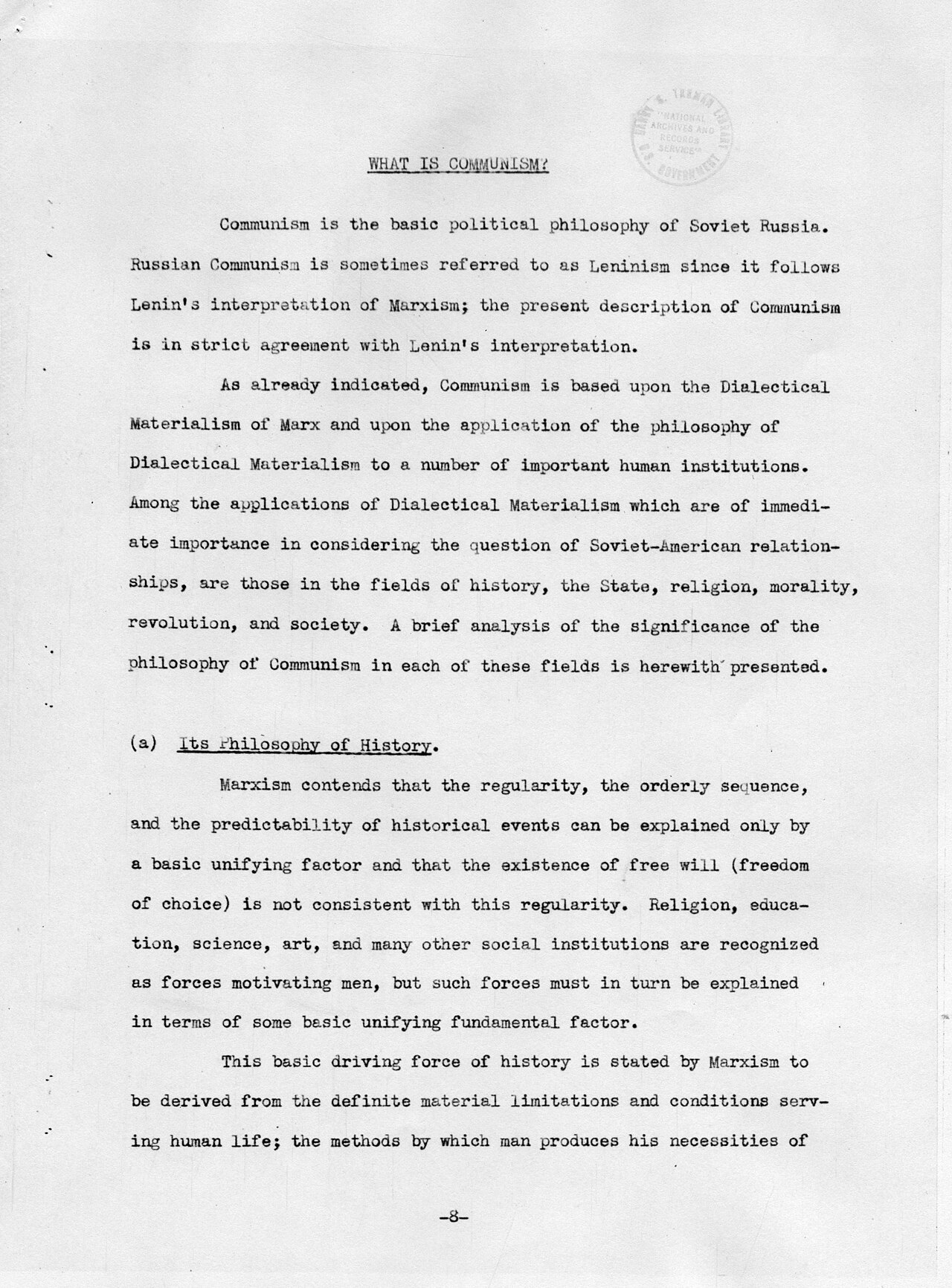
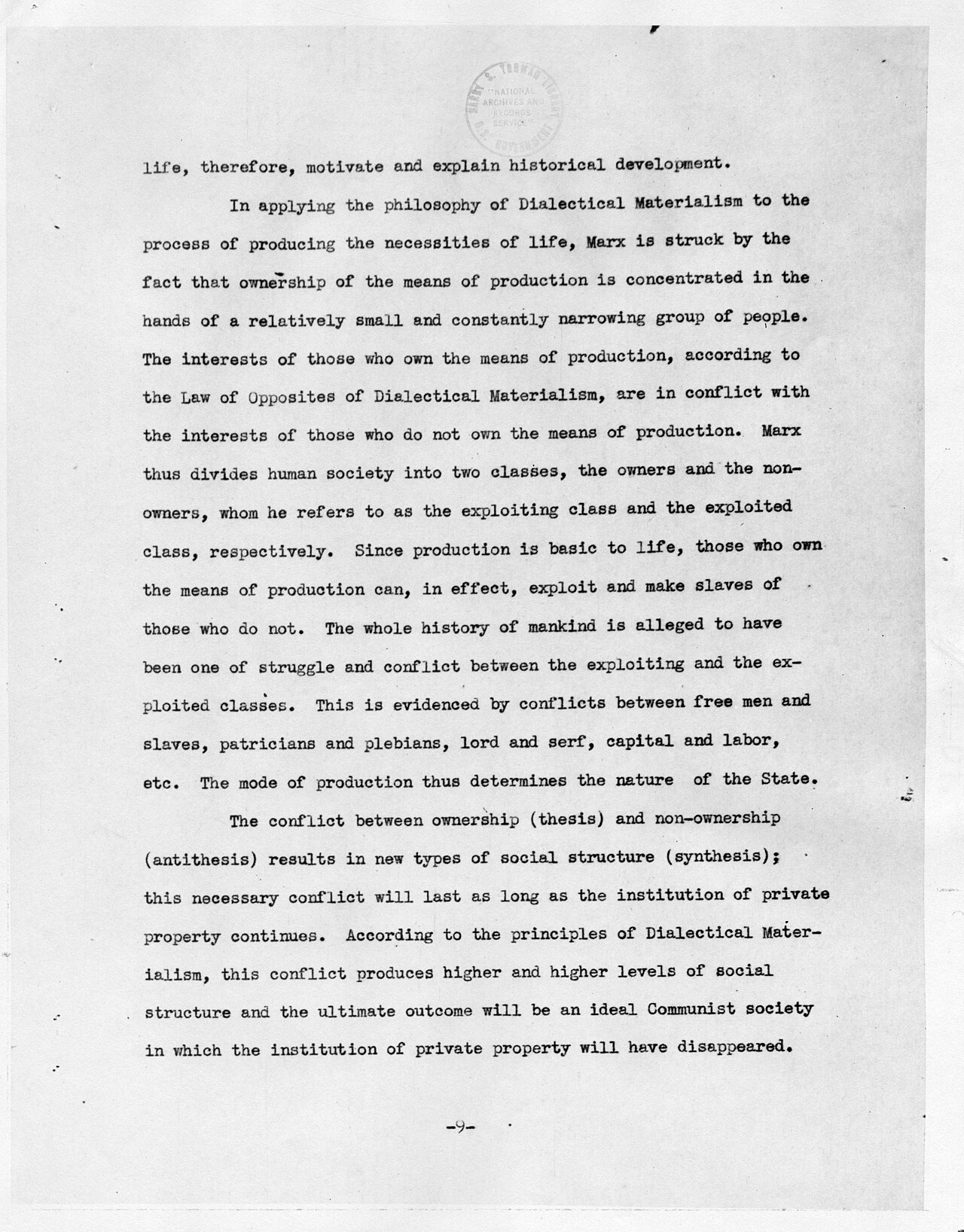
Dialectical materialism is a philosophy of nature and science developed in the late 19th century based on the writings of Karl Marx and Friedrich Engels. It synthesizes Georg Wilhelm Friedrich Hegel's dialectic with philosophical materialism, proposing that the world is material, all phenomena result from matter in motion, and evolution is driven by internal contradiction. It became the official state philosophy of the Soviet Union and other Marxist–Leninist states.
- field
- Philosophy of nature, philosophy of science
- known_for
- Official state philosophy of the Soviet Union; laws of dialectics (transformation of quantity into quality, interpenetration of opposites, negation of the negation)
- originators
- Karl Marx, Friedrich Engels
- term_coined_by
- Georgi Plekhanov (1890s)
- key_developers
- Vladimir Lenin, Joseph Stalin
Lore & Background
The intellectual origins of dialectical materialism trace to 19th-century German idealism, particularly Hegel's theory of the dialectic as a logical process of development. Marx and Engels inverted Hegel's idealist system, proposing that the dialectic was a process of the real, material world. While Marx never used the term 'dialectical materialism', he applied some of its principles in his critique of political economy and his theory of history, historical materialism. The Russian Marxist Georgi Plekhanov later formalized the system and coined the term 'dialectical materialism' in the 1890s. In the 20th century, dialectical materialism was further developed by Vladimir Lenin, who adapted it for his revolutionary political project. In this form, often referred to as 'diamat', it was taught as the official Soviet worldview and used to justify state policy. After Stalin's death, a period of 'de-Stalinization' led to critiques of its dogmatism and a 'thaw' in Soviet philosophy.
Reader's Guide
Dialectical materialism holds significance as a comprehensive philosophical system that claims to govern nature, society, and thought through general laws—most notably the transformation of quantity into quality, the interpenetration of opposites, and the negation of the negation. Its legacy is deeply tied to its role as the official state philosophy of the Soviet Union and other Marxist–Leninist states, where it was used to justify state policy and served as the mandatory ideological framework for all scientific and philosophical inquiry. The doctrine has been subject to extensive criticism. A central debate concerns the work of Engels, whom critics in the Western Marxist tradition like Georg Lukács accused of distorting Marx's thought with a positivist and metaphysical 'dialectics of nature'. Other commentators have argued that the doctrine evolved from a philosophical project into a rigid, quasi-religious 'political cosmology' under Soviet rule, serving primarily as an instrument of ideological control. The intellectual tradition that culminated in dialectical materialism began with German idealism and evolved through the work of Hegel, the Young Hegelians, Marx, Engels, and finally the Russian Marxists who formalized the doctrine.
Did You Know?
- The term 'dialectical materialism' was coined by the Russian Marxist Georgi Plekhanov in the 1890s.
- Karl Marx never used the term 'dialectical materialism' in his writings.
- After Stalin's death, a period of 'de-Stalinization' led to critiques of the doctrine's dogmatism and a 'thaw' in Soviet philosophy.
From Hegel's Idea to Marx's Matter
The philosophical lineage behind dialectical materialism runs through the grand systems of German idealism. Thinkers from Kant through Fichte, Schelling, and Hegel constructed frameworks in which reality was a single integrated whole governed by the dialectical interplay of opposites. Hegel's key move was to present the 'Concept'—the logical, self-driven development of thought—as the engine behind both consciousness and the external world, tracing its movement from the abstract category of 'Being' through successive contradictions toward the 'Absolute Idea.' Marx and Engels seized this dialectical engine and inverted it. Instead of locating the dialectic within the realm of Ideas, they relocated it into the concrete material world. Marx never used the label 'dialectical materialism,' yet he embedded its underlying principles in his critique of political economy and his theory of historical materialism. After his death, Engels extended the method into the natural sciences in Anti-Dühring (1878) and Dialectics of Nature, articulating what he saw as its universal laws. The Russian Marxist Georgi Plekhanov, working in the 1890s, ultimately formalized the system and gave it the name still in use today.
The Architecture of Contradiction
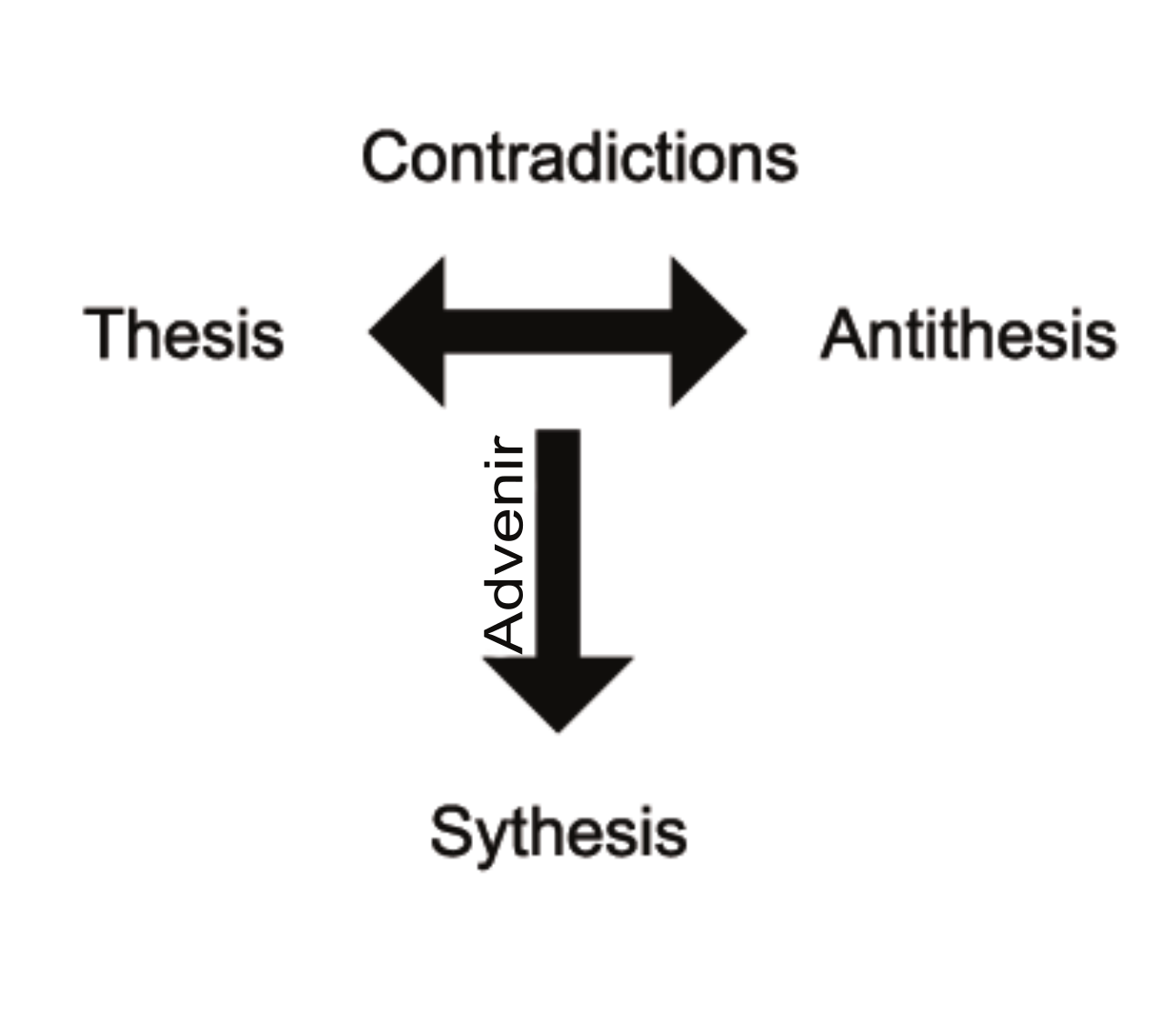
At its core, dialectical materialism makes a sweeping ontological claim: the world is fundamentally material, and every phenomenon—physical, social, or cognitive—is the product of matter in motion. The engine of change is not some external force but internal contradiction. The world evolves because opposing tendencies exist within every system, and their tension drives development forward. To make this process intelligible, the doctrine posits a small set of general laws said to operate across nature, society, and thought alike. The first, the transformation of quantity into quality, holds that gradual quantitative accumulation eventually precipitates a sudden qualitative leap. The second, the interpenetration of opposites, asserts that contradictory forces do not merely sit side by side but permeate and define one another—echoing the Romantic-era pairings of Universal and Particular, inner and outer, necessity and freedom that Schelling had worked out in his philosophy of nature. The third, the negation of the negation, describes a spiral in which each stage is overcome by its opposite, which in turn is itself overcome, producing a higher synthesis. Together, these three laws were presented as the universal grammar underlying all change.
From Philosophy to State Doctrine
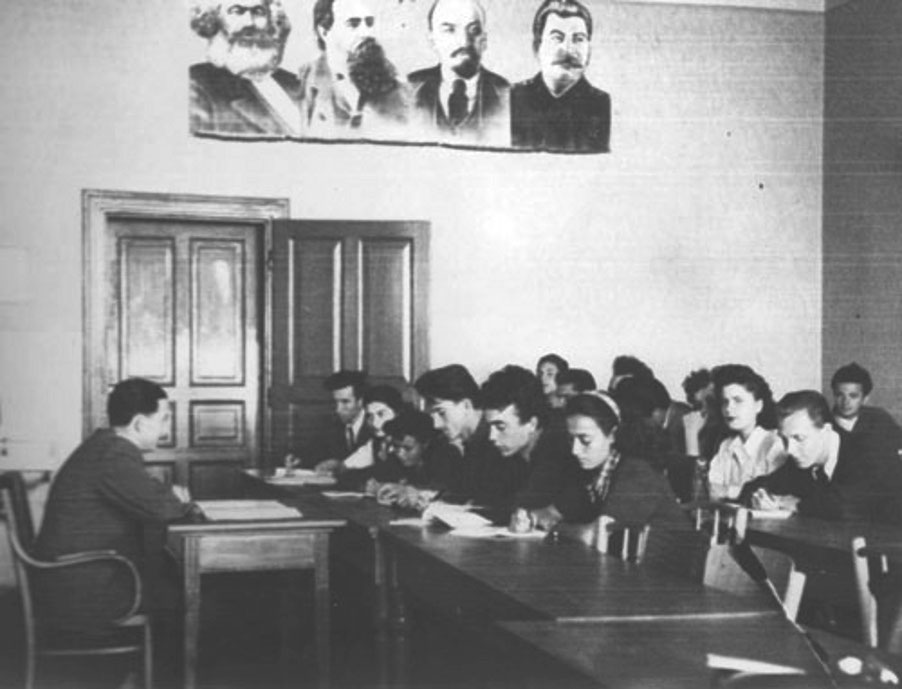
What began as a philosophical project was transformed into a political instrument in the twentieth century. Vladimir Lenin, in Materialism and Empirio-criticism (1909), redefined matter in strictly epistemological terms as 'objective reality' and introduced the principle of 'partisanship,' which held that all philosophy is inherently political and bound up with class struggle. This move effectively closed off the possibility of a neutral, purely academic engagement with the doctrine. The decisive codification came under Joseph Stalin. His 1938 essay Dialectical and Historical Materialism laid out the system in a form that became the mandatory ideological framework for every branch of scientific and philosophical inquiry in the Soviet Union. In this rigidified version, often abbreviated as 'diamat,' dialectical materialism was no longer a living philosophical debate but the official state worldview, deployed to justify and legitimize government policy. It was taught as the only acceptable lens through which to interpret the natural world, human history, and social organization. Stalin's death and the subsequent period of de-Stalinization opened a narrow window of critique, as Soviet philosophers began questioning the dogmatism that had calcified the doctrine and a cautious 'thaw' in intellectual life allowed limited departures from the rigid formula.
The Weight of Critique
Dialectical materialism has attracted sustained and pointed criticism from multiple directions. Within the Western Marxist tradition, the most prominent attack came from Georg Lukács, who accused Engels of fundamentally distorting Marx's thought. In Lukács's view, Engels's 'dialectics of nature'—the project of extending the dialectical method into the natural sciences—introduced a positivist and metaphysical character alien to Marx's original, historically grounded critique. The debate over whether Engels faithfully represented Marx or quietly replaced his dialectical method with a more mechanical, law-like schema has remained one of the central fault lines in Marxist scholarship. A second, broader line of criticism targets the doctrine's political trajectory. Commentators have argued that what began as a genuinely philosophical inquiry into the nature of change and contradiction was progressively hollowed out under Soviet rule into a rigid, quasi-religious 'political cosmology.' In this reading, the three laws ceased to be tools for analysis and became articles of faith, serving primarily as an instrument of ideological control that foreclosed genuine intellectual inquiry. The doctrine's status as mandatory state philosophy meant that deviation was not merely an academic error but a political transgression, entrenching the very dogmatism that de-Stalinization would later attempt to loosen.
Gallery
Frequently Asked Questions
Who created Dialectical materialism?
Karl Marx and Friedrich Engels developed this philosophy of nature and science in the late 19th century by merging Hegel's dialectical method with a materialist worldview. The specific label was later coined by Georgi Plekhanov in the 1890s.
What are the three laws of dialectics in Dialectical materialism?
The framework identifies three core laws: the transformation of quantity into quality, the interpenetration of opposites, and the negation of the negation. Together they describe how internal contradictions drive the evolution of all material phenomena.
Why is Dialectical materialism historically significant?
It served as the official state philosophy of the Soviet Union and other Marxist–Leninist countries, shaping their educational curricula and scientific institutions for decades. Vladimir Lenin and Joseph Stalin were key figures in further developing and institutionalizing the tradition.
How does Dialectical materialism differ from Hegel's idealism?
While it borrows Hegel's dialectical structure, it inverts the foundation by insisting that the material world is primary and consciousness is secondary. All phenomena are understood as expressions of matter in motion rather than the unfolding of an abstract spirit.
What field does Dialectical materialism belong to?
It sits at the intersection of the philosophy of nature and the philosophy of science, offering a comprehensive worldview about how material reality evolves. Its scope extends beyond pure physics to encompass social and historical processes as well.
More in Philosophical Traditions 25-27
Elsewhere in the Philosophical Traditions universe
Spotted an error? Know more?
This is a living reference — every entry is fact-audited, and reader corrections feed straight into our audit queue. Suggest an edit · See this site's audit record