
Applied ethics
Practical moral reasoning for real-world dilemmas across professions.

D. P. Chase · Public domain
Applied ethics is the practical aspect of moral considerations, focusing on real-world actions and their moral implications in areas such as private and public life, the professions, health, technology, law, and leadership. It emerged from debate surrounding rapid medical and technological advances in the early 1970s and is now established as a subdiscipline of moral philosophy, expanding the study of ethics beyond academic philosophical discourse.
- field
- Ethics, moral philosophy
- subdiscipline
- Applied ethics
- key_approach
- Four-principle approach (principlism)
- key_theorists
- Tom Beauchamp, James Childress, Albert Jonsen, Stephen Toulmin
- related_theories
- Consequentialism, deontology, virtue ethics, casuistry
- distinguished_from
- Normative ethics, meta-ethics, applied epistemology
Lore & Background
Applied ethics, as it appears today, emerged from debate surrounding rapid medical and technological advances in the early 1970s. It is a multi-professional subject requiring specialist understanding of ethical issues in fields like medicine, business, or information technology. Ethical codes of conduct now exist in almost every profession. One of the most influential approaches in bioethics and health care ethics is the four-principle approach developed by Tom Beauchamp and James Childress, which entails consideration of autonomy, non-maleficence, beneficence, and justice.
Reader's Guide
Applied ethics is significant because it bridges abstract moral philosophy with practical decision-making in real-world contexts, influencing fields such as bioethics, environmental ethics, and business ethics. Its emergence in the early 1970s marked a shift from purely theoretical discourse to addressing urgent moral dilemmas arising from medical and technological advances. The four-principle approach (principlism) has become a widely utilized framework in health care ethics, while casuistry offers an alternative method that prioritizes case-specific facts over overarching theory. Applied ethics remains a multi-professional subject, requiring collaboration across disciplines to address complex issues like euthanasia, resource allocation, pollution responsibility, and whistleblower duties. Its legacy includes the proliferation of ethical codes of conduct in nearly every profession and the ongoing refinement of methods to resolve moral conflicts.
Did You Know?
- Applied ethics emerged from debate surrounding rapid medical and technological advances in the early 1970s.
- The four-principle approach (principlism) was developed by Tom Beauchamp and James Childress.
- Casuistry, as advocated by Albert Jonsen and Stephen Toulmin, starts with the facts of a concrete case rather than with ethical theory.
- Applied ethics is distinguished from applied epistemology, which focuses on the application of epistemology in solving practical problems.
Ethics Among the Core Branches
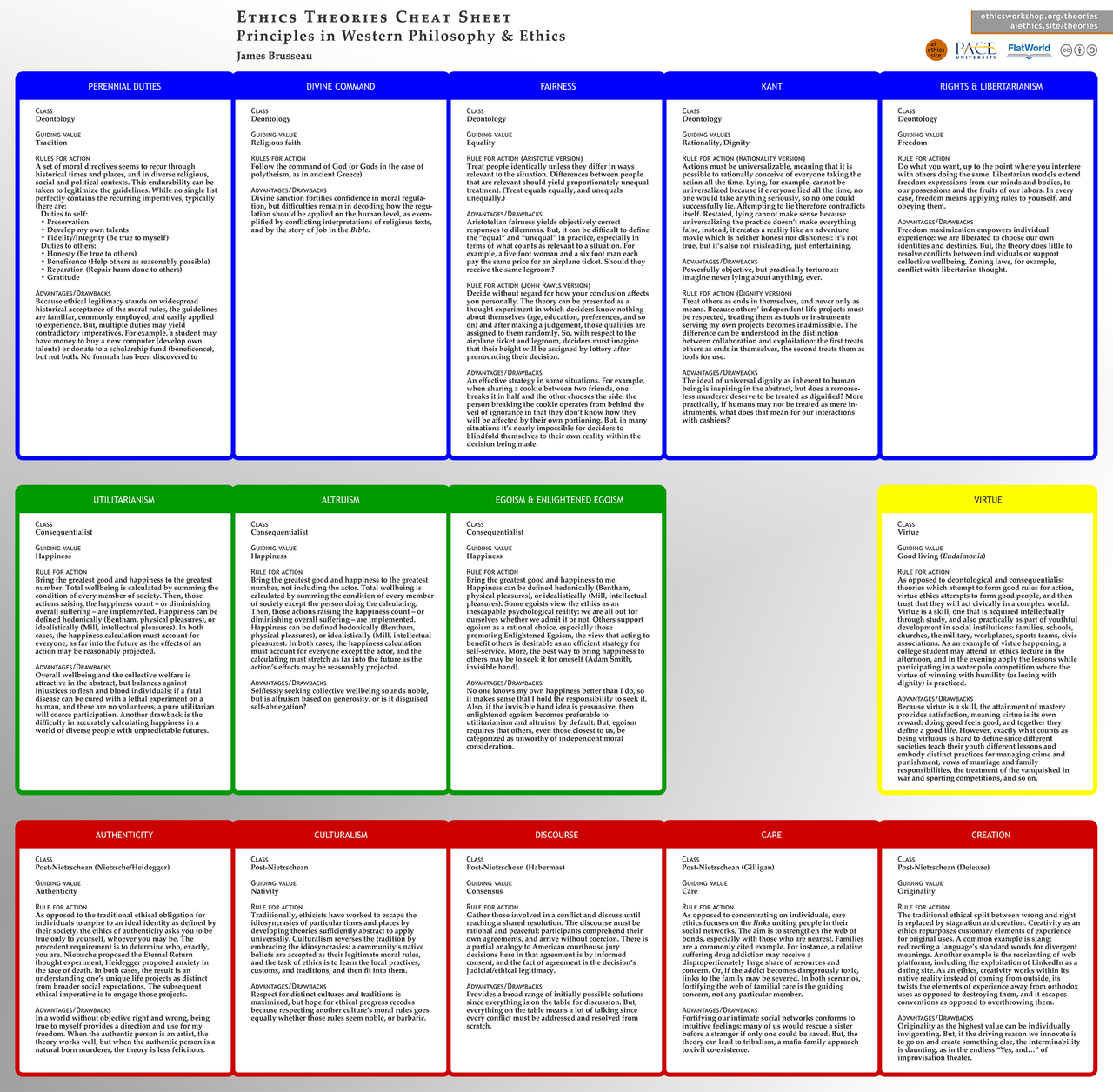
Within the broad architecture of philosophical inquiry, ethics occupies one of four principal branches alongside epistemology, logic, and metaphysics. While epistemology interrogates the nature and acquisition of knowledge, logic dissects the structure of valid reasoning, and metaphysics probes the most general features of reality and existence, ethics directs its inquiry toward moral principles and the determination of right conduct. This focus on practical moral reasoning distinguishes it from its sibling disciplines, yet it remains deeply intertwined with them—questions of value cannot be fully separated from questions of knowledge or the structure of reality. What makes ethics particularly dynamic is that, like every other major branch, it harbors competing schools of thought. Different philosophical traditions advance rival principles, theories, and methods for determining what is morally right, ensuring that the field remains a site of vigorous and ongoing debate rather than a settled body of doctrine.
Reaching Beyond the Academy
Applied ethical inquiry does not remain confined to university lecture halls. Philosophy, and ethics in particular, extends its reach into a wide array of practical domains including law, business, and journalism, where it supplies an interdisciplinary lens for examining the ethical questions those fields inevitably raise. The same pattern appears in the sciences: disciplines as diverse as physics and biology have spawned dedicated philosophical subfields that scrutinize their foundational concepts, underlying assumptions, methodological choices, and broader implications. This cross-pollination means that ethical reasoning is not a luxury reserved for philosophers but a working tool for professionals who must navigate moral complexity in their daily practice. The rational and critical character of philosophical inquiry—its insistence on reflecting on its own methods and presuppositions—gives it a distinctive edge when applied to real-world decision-making. By bringing systematic, reflective analysis to fields that often operate on practical intuition alone, ethical philosophy helps practitioners see the hidden assumptions and value judgments embedded in their work.
The Toolkit of Ethical Inquiry
Philosophers who work in ethics draw on a remarkably diverse set of intellectual tools to advance their arguments and test their conclusions. Conceptual analysis allows them to sharpen and clarify the meaning of key moral terms, while reliance on common sense and intuitions provides a starting point for evaluating proposed principles. Thought experiments—hypothetical scenarios stripped of distracting detail—help isolate specific moral variables and reveal where intuitions conflict. Analysis of ordinary language exposes how everyday words carry hidden assumptions that can distort ethical reasoning, and careful description of experience grounds abstract principles in the texture of real human life. Critical questioning, perhaps the most Socratic of these methods, relentlessly probes the foundations of accepted beliefs. Crucially, philosophical inquiry is not a one-way process: it is explicitly self-reflective, constantly examining whether its own methods and presuppositions are sound. This meta-level scrutiny distinguishes rigorous ethical analysis from mere opinion or advocacy.
From Natural Philosophy to Focused Inquiry
Understanding the modern identity of applied ethics requires appreciating how dramatically the scope of philosophy has contracted over the centuries. In earlier periods, the term encompassed virtually every form of rational inquiry; physics, chemistry, and biology were all subdisciplines of what was called natural philosophy. Isaac Newton's landmark 1687 work, whose title explicitly invoked natural philosophy, is today simply a foundational text of physics. The individual sciences gradually broke away and established themselves as independent academic disciplines. By the close of the modern period, philosophy had narrowed considerably, becoming primarily associated with metaphysics, epistemology, and ethics. In this refined sense, it is distinguished from the empirical sciences and mathematics, focusing instead on the rational study of reality, knowledge, and values. Ethics survived this contraction as a core pillar, and its applied dimension—addressing concrete moral questions in law, business, and public life—became one of the most visible ways philosophy continues to engage the world.
Gallery



Frequently Asked Questions
What is Applied ethics?
Applied ethics is the branch of moral philosophy that takes ethical reasoning out of the lecture hall and directs it at concrete decisions in medicine, technology, law, business, and public policy. Rather than debating abstract principles in isolation, it asks what the right course of action is in a specific, real-world situation.
What is Applied ethics's role or 'power' in the philosophical landscape?
Its core function is bridging the gap between normative ethical theories and the dilemmas professionals actually face, often using the four-principle approach (autonomy, beneficence, non-maleficence, justice) to structure practical judgment. It draws on consequentialism, deontology, virtue ethics, and casuistry as complementary lenses instead of reducing every problem to a single abstract rule.
Where does Applied ethics's origin story begin?
The subdiscipline crystallized in the early 1970s, driven by urgent questions raised by rapid advances in medicine and technology that outpaced existing legal and moral frameworks. Thinkers such as Tom Beauchamp, James Childress, Albert Jonsen, and Stephen Toulmin helped formalize the field, giving it a name, a methodology, and a place distinct from purely academic moral philosophy.
Why is Applied ethics considered important?
It matters because it forces ethical thinking to confront the messiness of actual human decisions—patient consent, AI deployment, corporate responsibility, judicial discretion—rather than remaining a thought experiment. By expanding moral inquiry beyond the academy, it gives clinicians, engineers, lawyers, and leaders a shared vocabulary for weighing competing values in practice.
How is Applied ethics different from Normative ethics or meta-ethics?
While normative ethics builds general theories of right and wrong and meta-ethics interrogates what 'moral' even means, applied ethics takes those frameworks as given tools and works downward into particular cases. It is also distinct from applied epistemology, which deals with knowledge and belief rather than action and obligation.
More in Philosophical Traditions 1-24
Elsewhere in the Philosophical Traditions universe
Spotted an error? Know more?
This is a living reference — every entry is fact-audited, and reader corrections feed straight into our audit queue. Suggest an edit · See this site's audit record